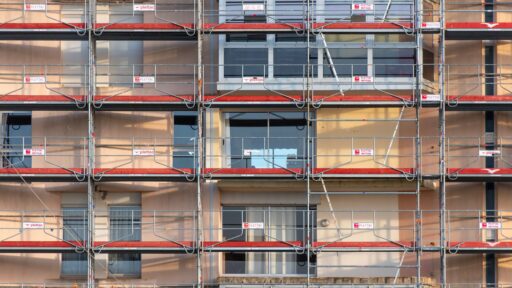

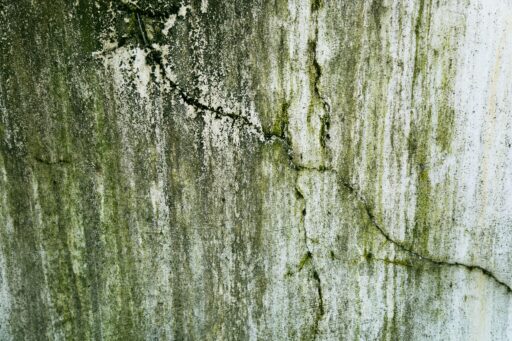
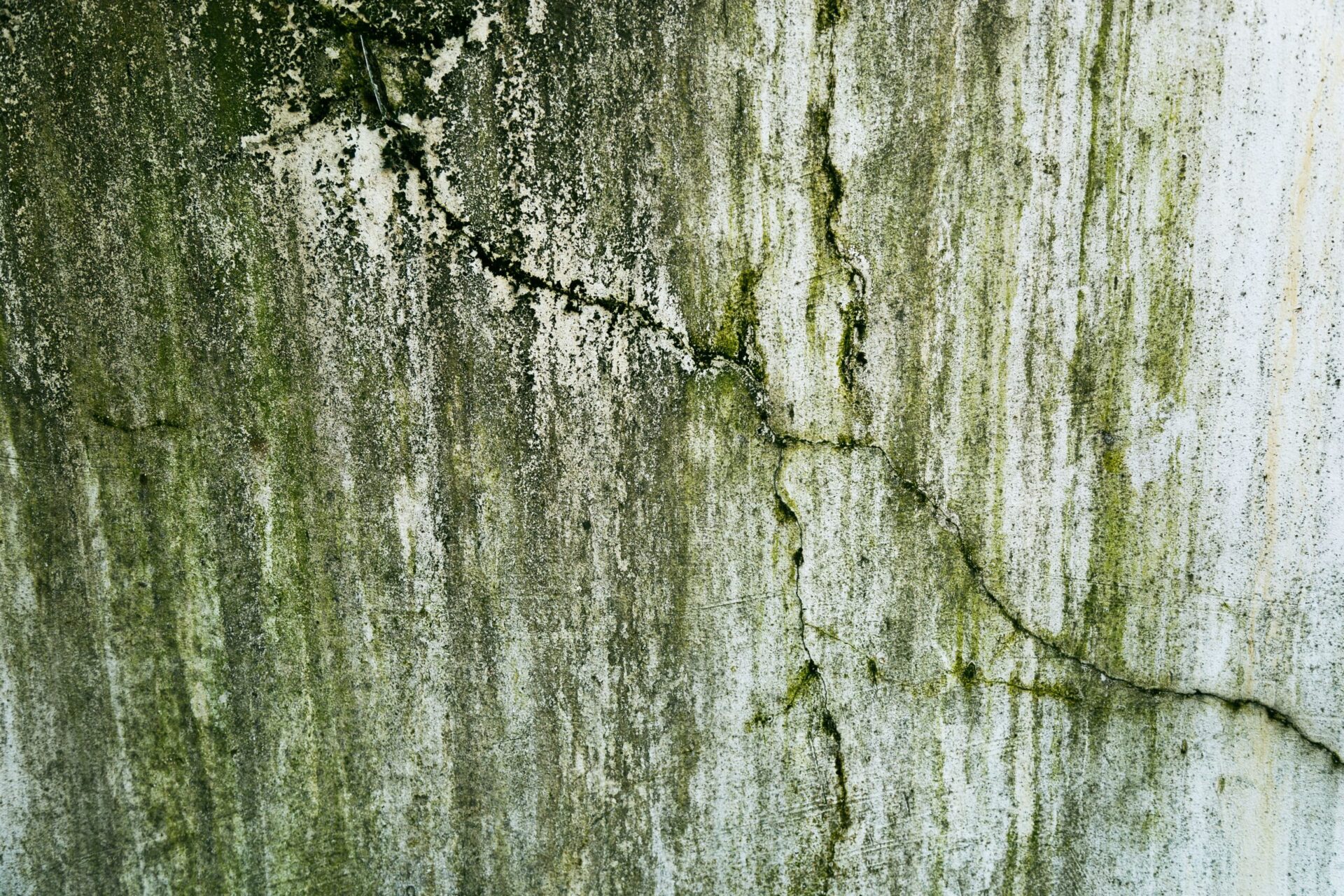
External wall insulation has become widespread in Europe with energy renovation. In France, Germany, Austria and Belgium, millions of square metres of facades have been covered with insulation, expanded polystyrene or mineral wool, protected by a thin render. And many of these facades, a few years later, become covered with green, grey or reddish streaks, often on the north and west faces, sometimes in regular patterns that trace the fixing anchors. EWI facade cleaning, like any render cleaning, starts with understanding why the algae come back.
This is neither a systematic installation defect nor inevitable. It is the direct consequence of the physics of a render laid over insulation. Understanding this mechanism makes it possible to clean correctly, without damaging a fragile system, and to judge which lasting solutions make sense. This article is aimed at owners, syndics (managing agents of French co-owned buildings) and property managers who notice an insulated facade turning green.
EWI facades: why external wall insulation turns green
A render thermally decoupled from the building
On a traditional masonry wall, the outer surface is connected to a large mass that stores the day’s heat and receives part of the heat from inside. At night, it cools slowly.
On an EWI facade, the outer layer is a render a few millimetres thick laid over insulation. That is precisely the purpose of the system: to stop the heat inside from reaching the outside. But it also means that the render has almost no thermal mass and receives almost no heat from the building. On a clear night, it radiates towards the sky and cools below the air temperature, often by several degrees. It then drops below the dew point, and moisture in the air condenses on its surface.
This phenomenon has been widely studied by building physics researchers, notably at the Fraunhofer IBP in Germany. Their measurements show that insulated facades stay damp markedly longer than solid facades, especially in the early morning, and that this night-time moisture is the main driver of algae growth. The same physics of radiative cooling is exploited by thermal roof inspection.
Orientation and surroundings make it worse
North faces receive no sun to dry the morning condensation. West faces take the prevailing driving rain across much of Atlantic Europe. Facades close to trees, hedges, bodies of water or farmland receive more spores and nutrients. Areas beneath window sills, defective copings or insufficient roof overhangs receive concentrated runoff.
Anchors and joints trace patterns
On some facades, the algae trace dots or a regular grid. These are the insulation fixing anchors or the joints between boards, which form slight thermal bridges. Depending on their design, they make the surface locally slightly warmer or slightly colder, and therefore more or less damp than the rest. This pattern does not necessarily indicate a serious defect, but it shows how closely biological growth follows surface temperature, to within a tenth of a degree.
Biocides in the render: protection that runs out
Most finishing renders and paints for EWI contain film biocides intended to slow colonisation. These substances must be partly soluble to work, which means they are gradually washed out by rain. Studies carried out notably by the Swiss institute Eawag have shown that this leaching is rapid in the first years, then slows down. The result is familiar to professionals: an EWI facade often stays clean for a few years, then turns green even though nothing has changed in its design.
Manufacturers have developed strategies to extend this protection, such as encapsulated biocides, released more slowly, or finishes whose surface limits water retention. Some paints are inspired by the lotus effect: a highly hydrophobic microstructure on which water beads and rolls off, carrying dirt with it. Other manufacturers, by contrast, favour hydrophilic finishes that spread water out so that it dries faster. Both approaches have their supporters, and their effectiveness depends on exposure.
Render cleaning on an EWI facade without damaging it
Pressure is the first danger
A thin render on polystyrene cannot withstand the same mechanical aggression as a cement render on concrete block. A high-pressure jet at short range can erode the finish, tear away the render’s texture, open microcracks and, on an already weakened area, detach the render from the insulation. Water forced into a crack can then reach the insulation and the reinforcement, where it will dry very slowly.
French professional recommendations on rendered EWI systems, such as the Pro’Réno recommendations on EWI over expanded polystyrene (in French), as well as system manufacturers’ documentation, stress maintenance and compliance with the system holder’s instructions. The Fédération française du bâtiment (in French), the French building industry federation, also sets out the rules of good practice applicable to these systems. The general rule is simple: low pressure, sufficient distance, no jet aimed at edges, corners and junctions with window and door frames.
The product must be compatible with the system
An EWI system is a set of components tested together: adhesive, insulation, reinforced base coat, primer, finish. It is covered by a European Technical Assessment or an avis technique (a French technical approval), and the system holder takes responsibility for the whole. Applying a cleaning product or a treatment that has not been validated can alter the behaviour of the finish, particularly towards water, and weaken the grounds for recourse in the event of defects. Before any cleaning, it is prudent to find the system reference, often recorded in the dossier des ouvrages exécutés (the as-built file handed over at the end of works in France), and to consult the manufacturer’s maintenance documentation.
Biocides based on quaternary ammonium compounds (“quats”) are the most widely used on these facades, because they work without mechanical action and leave a residual effect. This effect is temporary, as each rain washes away part of the product, and a cleaning application is not a preventive treatment. Ready-to-use, no-rinse treatments exist, such as SCALP ANTI-M, which its manufacturer presents as suitable for drone spraying; their compatibility with the system’s finish still needs to be checked on the technical data sheet. Hypochlorite can discolour tinted finishes. Our comparison hypochlorite or quaternary ammonium details these differences.
Use biocides safely. Always read the label and product information before use.
Water-repellent treatment should be handled with caution
A water repellent applied to an EWI finish may seem logical: if water is the problem, why not repel it? But research on these facades has shown that a strongly water-repellent surface holds condensation as droplets, which can encourage algae instead of slowing them. Above all, the original finish is already formulated with water-repellent additives. Adding a coat without the system holder’s agreement amounts to modifying a tested product. Our article on water-repellent treatments details these risks.
Diagnosing the render before any cleaning
Before cleaning, you need to make sure the render is sound. On EWI more than ten years old, several defects are common and must be identified:
- cracks, particularly at the corners of openings, where stresses concentrate,
- impacts and punctures at ground-floor level, caused by bicycles, balls or garden tools,
- delamination, detected by a hollow sound when the render is tapped,
- failed joints between the EWI and window and door frames, sills or copings,
- visible anchor marks, which may signal an installation defect or moisture in the insulation.
A close inspection flight picks up cracks and abnormal soiling well, but it does not detect delamination, which requires a check by touch. For facades accessible from the ground, sounding the lower areas is a useful complement to the aerial inspection. Any open defect must be repaired before cleaning, otherwise water and product will penetrate the system.
Is the drone suited to EWI facades?
On this type of substrate, drone cleaning has several real advantages.
It does not apply high pressure. The physics of free flight confines the drone to low-pressure application, which is exactly what a thin render requires. There is no risk of a hurried operator turning up the pressure to go faster.
It does not touch the facade. A badly positioned MEWP or scaffold can strike a render on insulation and puncture it, leaving a visible mark and an entry point for water. The drone works at a distance.
EWI facades are often large and flat. Buildings renovated with EWI generally present large continuous surfaces, without mouldings, over which spray coverage is even.
The treatment can be repeated. Since the finish’s biocide protection runs out, light, regular maintenance makes more sense than a heavy intervention every ten years. This is the case in which the drone is most relevant economically, as our article on facade renovation in a copropriété (the French system of co-ownership of a building) explains.
It also has its limits. The result of a biocide treatment is gradual, and a heavily colonised EWI facade stays marked for several weeks. Areas beneath balconies, loggias and overhangs can be difficult to reach. And the drone does not see the system’s defects: a crack, delamination or impact damage on the render must be identified and repaired before any cleaning, or water will get into the insulation.
Treating the cause: lasting solutions
A cleaning job, whatever the method, resets the facade to zero without changing its physics. If the facade stays cold and damp every morning, the algae will come back. Lasting solutions lie in the design.
Protect the facade from water. Sufficient roof overhangs, parapet copings with a drip groove, projecting window sills with a drip and downpipes in good condition limit concentrated runoff. These are often the most effective solutions, and they are sometimes simple to implement.
Reduce splashback at the foot of the facade. A resistant plinth, a draining ground surface or a gravel strip stop rain from splashing back onto the bottom of the render.
Limit shade and ambient humidity. Pruning trees and hedges too close to the facade speeds up morning drying. Moving a compost heap, a woodpile or an automatic watering zone at the foot of the wall also reduces local humidity and the supply of spores, at no cost.
Choose a suitable finish when repainting. When the facade needs repainting, choosing a finish whose colour, texture and additives suit the exposure can delay recolonisation. Dark colours, which absorb more solar radiation, dry faster in the morning, but they are subject to greater thermal stresses, and manufacturers often restrict their use on EWI.
Cost and frequency: what to plan for
Expressed in the reference unit used in our articles, one drone cleaning pass on a reference house, the indicative maintenance costs of an EWI facade are as follows.
| Intervention | Indicative cost (× reference unit) | Typical frequency |
|---|---|---|
| Biocide treatment by drone, detached house | 0.7–1.0× | Every 2 to 4 years depending on exposure |
| Biocide treatment by drone, 5-storey building | 4–7× | Every 2 to 4 years |
| Repainting with a suitable finish, house | 4–8× | Every 10 to 15 years |
| Correcting runoff details | Highly variable | Once |
These ranges depend heavily on exposure and climate. In the oceanic north-west and the continental interior, north faces often recolonise within two to three years. In the Mediterranean south, the phenomenon is slower on sunny faces, but very real in shaded areas.
EWI facade cleaning: the key points
An externally insulated facade that turns green has not necessarily been badly installed. It behaves as physics predicts: a thin render, cold and damp in the early morning, whose biocide protection runs out over time. Cleaning must respect the fragility of the system: low pressure, a compatible product, no crack left open, and preferably the system holder’s opinion.
The drone is well suited to this maintenance, precisely because it cannot deliver high pressure and because it makes light, regular treatment economical. But it does not replace diagnosing defects in the render, nor correcting the details that concentrate water. Without these corrections, each cleaning is only a reprieve of a few years.