Comparisons of facade and roof cleaning usually dwell on the cleaning itself: which detergent, what pressure, how long the result lasts. Yet on most buildings, the cleaning is only a minor share of what the owner pays. Most of the money goes on getting a person or a nozzle within reach of the surface, then keeping that access in place long enough to finish the job. With scaffolding, the money goes on a temporary structure that has to be designed, delivered, erected, inspected, hired and dismantled. With a mobile elevating work platform (MEWP), it goes on a hired machine and the ground space it occupies. With a drone, it goes on a crew, an aircraft and a regulatory file. That is what makes drone facade cleaning, MEWP hire and scaffolding so different in cost.
Seen from this angle, choosing between the three is mostly a matter of choosing an access system. And access systems behave in much the same way everywhere in Europe, because the factors that drive their cost are the same everywhere: labour hours, hire duration, ground area occupied and the number of days on which the weather allows work. Absolute prices vary from one country to another, but the ratios between the methods do not. The three options are compared below on four of these variables, before looking at the cases where the drone loses.
Reference house and reference building: the unit of measurement for drone cleaning
All the figures that follow are multiples of a single reference unit: one drone cleaning pass on the reference house, that is, a two-storey detached house, roof and facades included, with ordinary access from a garden or driveway. A second reference, the reference building, is a five-storey residential building, with eaves at about 15–18 m and a facade overlooking a public pavement.
The ranges are indicative. They reflect typical labour and hire patterns, not quotes; some jobs may fall outside them.
Drone, MEWP or scaffolding: the comparison in four rows
| Variable | Drone | MEWP | Scaffolding |
|---|---|---|---|
| Relative cost: reference house | 1.0 | 2–3× | 3.5–5× |
| Relative cost: reference building | 4–7× | 10–16× | 20–35× |
| Days on site (house / building) | 0.5–1 / 2–4 | 1–2 / 5–10 | 4–7 / 3–6 weeks |
| Disruption for occupants | A few hours: safety perimeter, windows closed, vehicles moved | A few days: machine footprint, outriggers, presence at window height | Several weeks: light blocked, windows hard to use, exposure to intruders |
| Sensitivity to weather | The highest (wind, rain at the time of application) | Medium (wind limit built into the machine’s design) | The lowest once erected |
The figures for the building are the least certain. For scaffolding, the top of the range depends on minimum hire periods, pavement protection and how easily the scaffold can be tied into the facade.
Why the cost gaps between drone, MEWP and scaffolding persist
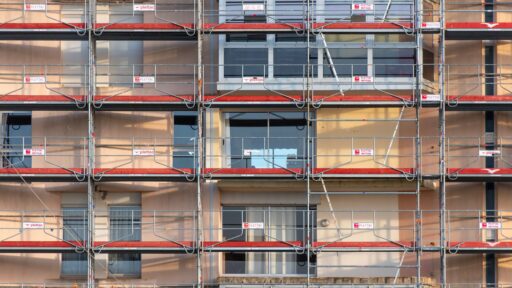
Scaffolding: you are paying for a temporary building
In Europe, facade scaffolds are designed and classified under product standards such as EN 12811-1 (in French), which sets load classes and bay widths. Once in place, a scaffold is a structure: it must be tied to the building at regular intervals, stand on suitable ground and be inspected after erection and then after every episode of severe weather. Its cost breaks down into four items: transport, erection labour, hire duration and dismantling labour. Only the hire duration depends on the cleaning. Erection and dismantling depend on facade area multiplied by height, and they are paid in full whether the scaffold is then used for one day or thirty.
This is why the scaffolding multiple rises from 3.5–5× on the house to 20–35× on the building. The area cleaned is multiplied by roughly five to seven, but the scaffold grows faster. Above a few storeys, it needs more ties, heavier bases and often a covered walkway or protective netting to meet the obligation to protect anyone working at height (in French) and anyone below. Sheeting adds a further cost: it turns a permeable frame into a sail, which sharply increases wind load and therefore the number of ties required.
MEWP: you are paying for hire time and reach
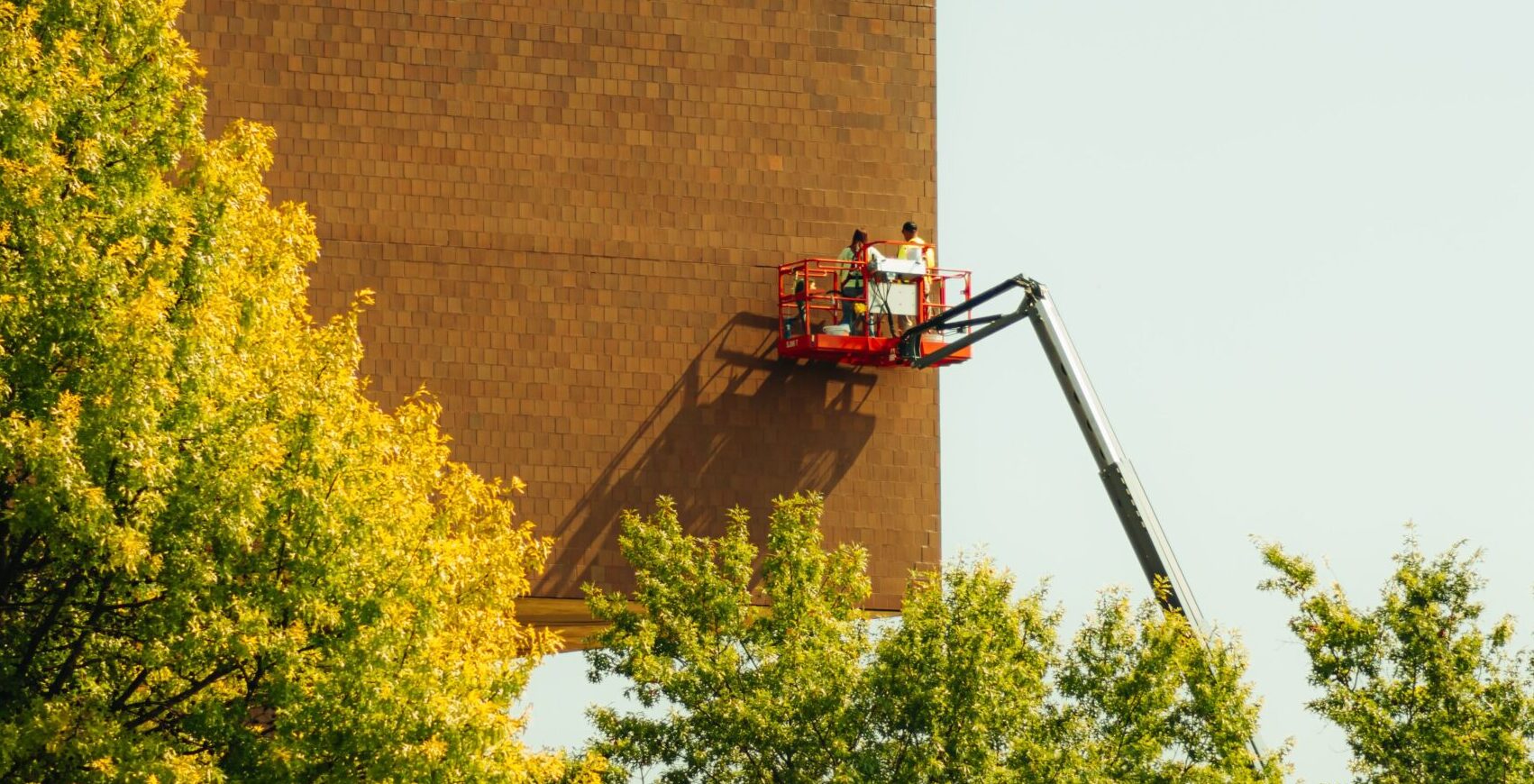
Mobile elevating work platforms are built to EN 280 (in French), which sets stability requirements, including a design wind speed of 12.5 m/s for machines intended for outdoor use. For the house, a towable platform or a small self-propelled model (for example Haulotte’s articulated booms (in French)) is enough, so the multiple stays at 2–3×. The building requires a truck-mounted platform offering at least 20 m of working height. These machines cost several times more per day, need a qualified operator and must be repositioned facade by facade. Each move means stowing, driving, deploying the outriggers and levelling again: unproductive time, all billed at the full rate.
Drone: you are paying for crew time and fixed costs
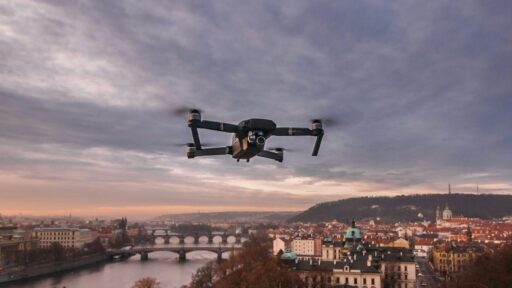
A drone pass is mostly crew time, plus the fixed costs of a site visit, an operational authorisation file and a safety perimeter plan. The application itself is fast. A low-pressure cleaning drone sprays a product without scrubbing, so it covers roof and facades in a few hours rather than several days. That is its strength. Its weakness is that fixed costs weigh heavily on small jobs, and that it can deliver nothing other than a spray.
What the access method changes about facade cleaning and moss removal
The access method also changes the cleaning process, a point most comparisons pass over in silence.
Contact or no contact
From a MEWP or a scaffold, an operative can touch the surface. That allows mechanical removal (brushing or scraping moss cushions off tiles), close-range rinsing with a controlled angle and pressure, and brush application of the product on sensitive areas. A drone is limited to what a nozzle held 1–3 m from the surface can deliver. In practice, that means low-pressure application of a biocide or an oxidising solution, sometimes followed by a rinse, or of a no-rinse cleaner that its manufacturer presents as suitable for drone spraying (for example SCALP FACANET PAE, for soiling caused by air pollution).
This affects how quickly the result becomes visible:
- Oxidisers, such as dilute sodium hypochlorite, bleach the pigments of algae and cyanobacteria within minutes to hours, so the visual change is fast.
- Quaternary ammonium biocides work by destroying cell membranes. They reliably kill biological growth, but the dead biomass stays on the surface until rain and wind carry it away, which generally takes a few weeks to a few months. Their benefit is a residual effect that slows recolonisation. This effect is temporary, as each rain washes away part of the product, and a cleaning application is not a preventive treatment: the difference is explained in our article on water-repellent and anti-moss treatment after cleaning.
- Moss cushions and lichens are the extreme case. A thick moss cushion on a clay or concrete tile holds water like a sponge, and chemical treatment kills it without removing it. On stone, dead lichen thalli can stay attached for a long time. When the client expects a clean surface the same day, only mechanical removal achieves it, and that requires a person within arm’s reach.
Biofilm penetration and contact time
Algal and cyanobacterial biofilms are embedded in extracellular polymeric substances, a hydrated matrix that slows the diffusion of biocides to the cells. The effectiveness of the treatment therefore depends on contact time: the product must stay wet on the surface long enough to penetrate. A person working from a MEWP can re-wet an area that dries too quickly in sun or wind. A drone has to rely on application rate and droplet size to leave a film that holds. Droplets that are too fine drift or evaporate; too coarse, and they run off vertical surfaces. It is this balance, far more than flight endurance, that is the drone’s real constraint.
An inspection is not a diagnosis
A drone camera, thermal included, gives excellent visual coverage. It cannot tap render to find hollow areas, lift a tile or test a mortar joint. An expert on a MEWP can.
Time on site and disruption during a facade cleaning job
Scaffolding disrupts through how long it stays. Erection and dismantling each take from one to several days on the house, and much longer on the building. Hire is often charged by the week, with minimum periods. While the scaffold is up, occupants lose natural light, especially if it is sheeted, and use of the windows is restricted. Upper floors become easier for intruders to reach, a point insurers regularly stress. When the scaffold stands on public land, local rules on permits to occupy the pavement or carriageway (in French) apply for its whole duration, often with protected pedestrian walkways.
MEWPs disrupt through their footprint and ground loads. Outriggers transmit concentrated loads to small pads, and a truck-mounted platform can exert several tonnes on each of them. Pavements above cellars, utility chambers or weak road foundations may need spreader plates, or may be unusable, which must be checked before booking the job. Occupation is shorter than with scaffolding, but it is a heavy vehicle, and the same local permit rules apply if it stands on the pavement or carriageway.
Drones disrupt for a few hours, but in a different way. The safety perimeter must keep uninvolved people away from the area below, windows and air vents must stay closed during spraying, vehicles and garden furniture must be moved or covered, and rotor noise is noticeable at close range. On the building, getting every household to keep its windows closed is harder than on a single house.
Weather and drone cleaning: fragility versus the cost of waiting
The three methods are affected by weather in opposite ways, and this is the most neglected aspect of the comparison.
- Drones are the most weather-sensitive. Spraying requires moderate wind at working height, because both drift and hover stability deteriorate as the wind picks up. Operational limits of around 8–10 m/s are common, but this figure is indicative and depends on the aircraft. Most biocides also require a dry window after application; manufacturers generally specify from a few hours to one or two days without rain, so check the product sheet. Effectiveness drops at low temperatures, and frost stops work entirely.
- MEWPs have a strict wind limit built into their design, generally 12.5 m/s, and rain makes little difference to the machine itself.
- Scaffolding, once erected and inspected, allows work in almost any weather short of a storm.
The cost of waiting runs the other way. A postponed drone job costs almost nothing: no equipment is on hire and the crew is simply rescheduled. A scaffold standing idle through two rainy weeks keeps running up hire charges. The drone is therefore fragile in the short term but cheap to reschedule, whereas scaffolding is robust but expensive to leave standing.
Geography determines how much this factor weighs. On the Atlantic and North Sea coasts, sustained winds reduce the number of workable drone days, particularly in autumn and winter, when moss and algae growth is most visible. In continental central Europe, the main constraints are temperature and frost rather than wind. On many Mediterranean sites, wind and rain are rarely the limiting factor; heat is, because it evaporates the applied film before it has had time to act, so application moves to early morning. Our article on the best season to clean a roof or facade sets out this timing by climate zone.
The cases where drone roof or facade cleaning loses
The drone is only the cheapest access method when cleaning is the whole job. In the following situations, it loses outright:
- The building needs work other than cleaning. If there are repairs to do (repointing, replacing broken tiles, redoing flashings, clearing gutters, patching render), a scaffold or MEWP will be needed anyway. Once that access is in place, the extra cost of cleaning from it is close to zero, and a separate drone pass is just an additional cost.
- The surface needs to be touched. Thick moss cushions, lichens on stone when a visible result is expected quickly, and thick crusts of soot or pollution require mechanical removal or a conservator’s hand methods.
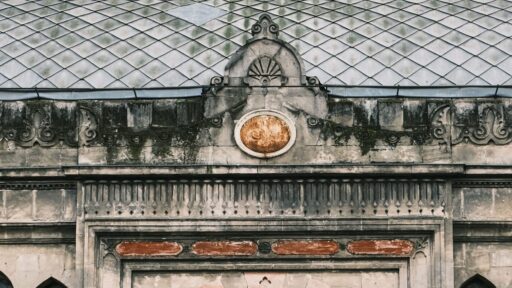
- The substrate is sensitive or historic. National heritage bodies generally recommend, for historic masonry, test areas (trial panels) and the gentlest effective method. Large-scale, purely chemical aerial application sits badly with that approach, even where it is technically possible.
- No safety perimeter can be set up. In narrow streets that cannot be closed, or on busy facades, the ground risk assessment may simply not allow the flight; a MEWP or a scaffold with a protective walkway is then the compliant answer.
- Wind exposure is constant. Tall coastal facades and large exposed buildings may offer so few suitable days that scheduling becomes impossible.
- The job is very small. A single low facade that can be reached safely by other means cannot absorb the drone’s fixed costs: the baseline of 1.0 no longer applies.
- The condition of the building is unknown. When a hands-on, close-up diagnosis is needed first, the access that allows it generally allows the cleaning too.
In practice: four questions before choosing drone facade cleaning
Use the four rows of the table as a sequence of questions.
First, is cleaning the only task? If not, choose the access the other work requires and clean from it. If so, the drone’s cost advantage is real and grows with the height of the building.
Next, what result is expected, and when? A purely chemical treatment is effective against algae and cyanobacteria, but it often cleans gradually, over several weeks. If a visibly clean surface is expected on handover day, or if the growth is thick moss or lichen, plan for contact methods.
Third, what can the site put up with? Weigh a few hours of safety perimeter and closed windows against several days with a heavy machine on the pavement, or several weeks behind a scaffold. In occupied residential buildings, the duration of the disruption generally matters more to occupants than its intensity.
Finally, how does local weather affect the schedule? In exposed or wet climates, build flexibility into a drone job. For scaffolding, budget for idle hire days.
On the reference house, the drone generally costs between a half and a third of a MEWP, and between a fifth and just under a third of scaffolding, provided the only task is the chemical cleaning of a surface that responds to that kind of treatment. When that condition is not met, the other methods are often the better choice.